
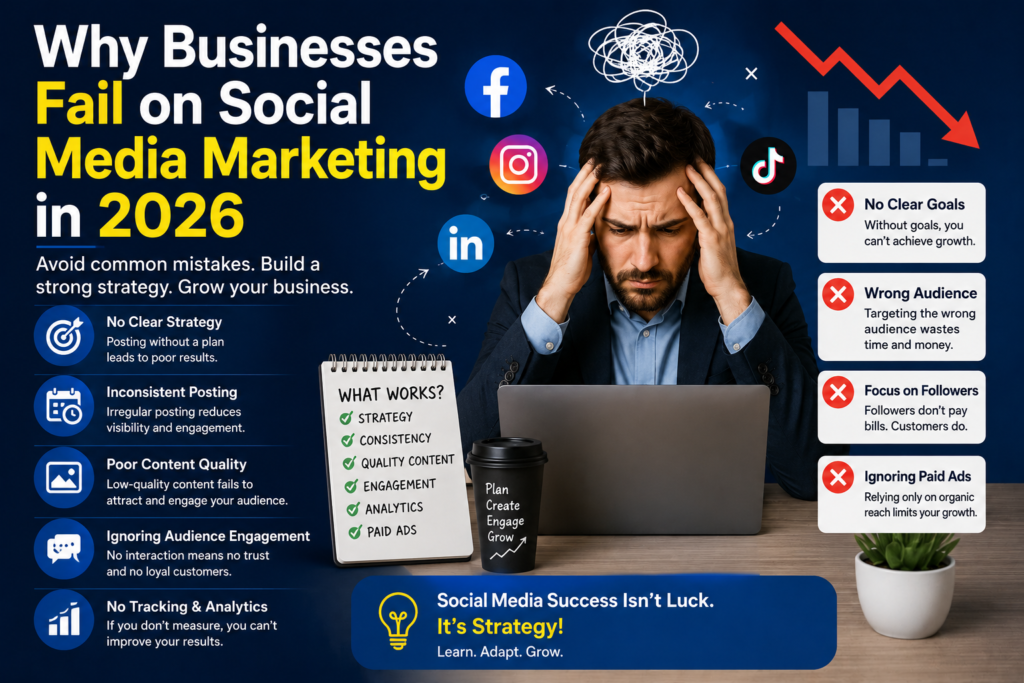
Why Businesses Fail on Social Media Marketing in 2026
Introduction
Why businesses fail on social media marketing. Social media has completely changed the way businesses connect with customers. Platforms like Instagram, Facebook, LinkedIn, and TikTok are now some of the most powerful marketing channels in the world. Every day, millions of businesses compete for customer attention online. Yet despite the massive opportunities available, many brands still struggle to generate results. This is exactly why businesses fail on social media marketing even after spending time, effort, and money on content creation and advertising campaigns.
Many business owners believe simply posting on social media is enough to generate followers, leads, and sales. However, social media marketing requires strategy, consistency, audience understanding, and high-quality content. Businesses that fail to understand these factors often experience low engagement, poor visibility, and weak conversions. In 2026, businesses that ignore modern social media strategies are losing customers to competitors who understand how digital marketing actually works.
Lack of a Clear Social Media Strategy
One of the biggest reasons why businesses fail on social media marketing is the absence of a clear strategy. Many businesses start posting random content without understanding their goals, audience, or brand identity. Without a proper plan, social media efforts become inconsistent and ineffective.
Successful businesses create content with purpose. They understand what type of audience they want to attract, what problems their customers face, and what type of content generates engagement. Businesses that fail on social media marketing usually focus only on selling products instead of building relationships with customers. Modern consumers prefer brands that educate, entertain, and inspire rather than businesses constantly pushing sales messages.
A strong strategy includes content planning, audience research, posting consistency, branding, and performance tracking. Without these elements, social media marketing becomes directionless.
Inconsistent Posting Reduces Brand Visibility
Consistency is one of the most important factors in social media growth. Many businesses start strong but eventually stop posting regularly because they do not see immediate results. This inconsistency damages brand visibility and reduces audience engagement over time.
Social media algorithms reward active and consistent accounts. Businesses that regularly publish engaging content are more likely to appear in feeds, stories, and explore sections. On the other hand, inactive accounts slowly disappear from customer attention.
This is another major reason why businesses fail on social media marketing. They expect instant success without understanding that social media growth requires patience and consistency. Brands that stay active build stronger customer relationships and improve long-term engagement.
Poor Content Quality Pushes Customers Away
Modern audiences are exposed to thousands of posts every single day. Low-quality graphics, weak captions, blurry videos, and boring content fail to capture customer attention. Businesses that ignore content quality often struggle to compete with brands producing professional and engaging visuals.
Customers today are attracted to visually appealing content, storytelling, and emotional branding. Businesses that invest in high-quality graphics, reels, videos, and educational content naturally generate better engagement. Content should not only promote products but also provide value to the audience.
One of the biggest mistakes businesses make is creating content only for themselves instead of focusing on customer interests. This customer disconnect is a major reason why businesses fail on social media marketing in competitive industries.
Ignoring Audience Engagement Damages Growth
Social media is designed for interaction and communication. Businesses that only post content without engaging with followers often experience low customer loyalty and weak engagement rates. Customers want brands that reply to comments, answer messages, and participate in conversations.
Engagement helps businesses build trust and stronger customer relationships. When businesses interact with their audience, customers feel valued and connected to the brand. This emotional connection increases customer loyalty and encourages repeat purchases.
Many businesses fail on social media marketing because they treat social media like traditional advertising instead of a communication platform. Successful brands understand that conversations build communities, and communities drive business growth.
Businesses Fail by Focusing Only on Followers
One of the most common social media mistakes businesses make is obsessing over follower count instead of customer conversion. Large follower numbers may look impressive, but followers alone do not guarantee sales or business growth.
Many businesses buy fake followers or focus on vanity metrics instead of attracting the right audience. Fake engagement damages credibility and reduces overall reach because social media algorithms prioritize genuine interactions.
The real goal of social media marketing should be lead generation, customer trust, and business growth. Businesses that focus on meaningful engagement, valuable content, and audience targeting achieve better long-term results. This shift in focus is essential for businesses that want to avoid failing on social media marketing.
Lack of Paid Advertising Limits Reach
Organic reach on social media has become increasingly competitive. Many businesses rely only on free posting and ignore paid advertising completely. While organic content is important, businesses that combine organic strategies with paid advertising grow much faster.
Platforms like Facebook and Instagram offer advanced targeting tools that help businesses reach specific audiences based on interests, location, age, and behavior. Paid advertising increases visibility, generates leads, and improves customer reach significantly.
Businesses that refuse to invest in Meta Ads often struggle to compete with brands running targeted advertising campaigns. In 2026, social media marketing success depends heavily on combining organic content with strategic paid promotions.
Failure to Track Analytics and Performance
Another major reason why businesses fail on social media marketing is ignoring analytics and performance data. Many businesses continue posting content without understanding what actually works. Without data analysis, businesses cannot improve their marketing strategies effectively.
Social media analytics help businesses track engagement, reach, website clicks, conversions, audience behavior, and campaign performance. This information allows businesses to optimize content and improve results over time.
Successful brands constantly test different content formats, captions, posting times, and advertising strategies. Businesses that fail to analyze data often waste time and marketing budgets on ineffective campaigns.
The Future of Social Media Marketing
Social media marketing is evolving rapidly, and customer expectations continue to change every year. Businesses that adapt to trends, create engaging content, and build genuine customer relationships are seeing incredible growth opportunities online.
In 2026, businesses that focus on authenticity, storytelling, video content, and audience engagement will dominate social media platforms. Brands that ignore digital trends and rely on outdated marketing methods may struggle to survive in an increasingly competitive online environment.
Understanding why businesses fail on social media marketing helps companies avoid common mistakes and create stronger marketing strategies. Social media success is no longer about simply posting content. It is about building trust, creating value, and connecting emotionally with customers.
Conclusion
Social media marketing has become one of the most powerful tools for business growth, but success requires more than random posting and promotional content. Businesses fail on social media marketing when they ignore strategy, consistency, audience engagement, content quality, and performance tracking.
Brands that focus on building customer relationships, creating valuable content, and using smart advertising strategies are achieving stronger growth online. In today’s digital world, businesses that understand social media marketing are attracting more customers, increasing brand trust, and generating higher revenue.
The future belongs to businesses that understand how to connect with audiences online. Companies that adapt to modern marketing strategies will continue growing while competitors struggle for visibility and engagement.