
Best Digital Marketing Strategies for Real Estate Businesses in 2026
Introduction
Best digital marketing strategies for real estate businesses.The real estate industry has changed dramatically over the last few years. Buyers no longer depend only on newspaper advertisements, banners, or local brokers to find properties. Today, almost every customer starts their property search online. Whether someone is searching for luxury apartments, commercial spaces, rental properties, or investment opportunities, the first thing they do is open Google or social media platforms. This shift in customer behavior is exactly why digital marketing for real estate businesses has become more important than ever in 2026.
Real estate companies that invest in online marketing are generating more leads, building stronger brand authority, and closing more deals compared to businesses relying only on traditional marketing methods. In a highly competitive market, visibility is everything. If your property business is not visible online, potential buyers may never discover your services. This is why understanding the best digital marketing strategies for real estate businesses is essential for long-term growth and success.
Search Engine Optimization Helps Real Estate Businesses Rank on Google
One of the most powerful digital marketing strategies for real estate businesses is Search Engine Optimization, commonly known as SEO. Most buyers search online before contacting an agent or visiting a property site. They search for terms like “luxury apartments near me,” “best property dealer,” or “commercial property in Delhi.” Real estate businesses that appear on the first page of Google naturally attract more traffic and inquiries.
SEO helps property businesses improve their visibility by optimizing websites, blogs, keywords, and local search results. A properly optimized website can continuously generate leads without spending money daily on advertisements. This long-term benefit makes SEO one of the most cost-effective digital marketing strategies for real estate businesses in 2026.
Businesses that regularly publish blogs, optimize property pages, and improve website speed are seeing better rankings and stronger customer trust online.
Social Media Marketing Builds Brand Trust
Social media platforms like Instagram, Facebook, LinkedIn, and YouTube have become essential tools for property marketing. Buyers today want more than property images. They want virtual tours, neighborhood insights, video walkthroughs, and lifestyle-focused content before making buying decisions.
Social media marketing allows real estate businesses to connect directly with potential buyers through engaging content and conversations. Instagram reels, Facebook stories, and YouTube property tours help businesses showcase properties in a visually attractive way. This emotional connection helps customers imagine themselves living or investing in the property.
Another reason social media marketing works so well is because it builds brand trust. Customers are more likely to contact businesses that maintain active and professional social media profiles. In 2026, businesses that consistently create engaging content are dominating the real estate market online.
Meta Ads Generate High-Quality Real Estate Leads
Paid advertising is one of the fastest ways to generate real estate leads online. Meta Ads on Facebook and Instagram allow businesses to target specific audiences based on location, interests, age, income level, and buying behavior. This advanced targeting helps real estate businesses reach people who are genuinely interested in buying or investing in properties.
Meta advertising is especially effective for promoting residential projects, luxury apartments, commercial spaces, and rental properties. Businesses can run lead generation campaigns that collect customer details directly through Facebook forms, WhatsApp integration, and Messenger ads.
This targeted advertising approach helps businesses generate high-quality leads while reducing wasted marketing budgets. Real estate companies that combine social media content with Meta Ads are achieving faster growth and stronger customer engagement.
Video Marketing Increases Customer Engagement
Modern customers prefer video content over plain text and images. Video marketing has become one of the best digital marketing strategies for real estate businesses because it creates a more immersive experience for buyers.
Property walkthrough videos, drone shots, neighborhood guides, customer testimonials, and behind-the-scenes construction updates help businesses capture audience attention quickly. Videos allow customers to experience the property virtually before scheduling site visits.
Platforms like Instagram Reels, YouTube Shorts, and Facebook Videos are helping real estate businesses generate massive engagement online. Businesses using video marketing are not only increasing visibility but also improving customer trust and conversion rates.
In 2026, businesses that ignore video content may struggle to compete with brands creating visually engaging property experiences online.
Google Ads Help Real Estate Businesses Reach Active Buyers
Google Ads are another highly effective strategy for real estate marketing because they target customers actively searching for properties online. Unlike social media marketing where businesses create interest, Google Ads capture users already looking for real estate solutions.
For example, when someone searches “best apartments in Gurgaon” or “buy luxury villa in Dubai,” Google Ads can place your business directly in front of those customers. This high-intent traffic often converts better because users already have buying intent.
Google Ads also help businesses target local customers, increase website traffic, and improve inquiry generation. Real estate companies that use both Google Ads and Meta Ads together are creating powerful lead generation systems in 2026.
Content Marketing Builds Authority and Credibility
Content marketing is another essential strategy for real estate businesses looking to establish authority online. Customers trust businesses that provide valuable information instead of only promoting properties constantly.
Blogs about investment tips, home-buying guides, real estate market trends, property financing, and legal advice help businesses position themselves as industry experts. Informative content also improves SEO rankings and increases website traffic organically.
When customers consistently see helpful content from a real estate business, they begin to trust the brand more. This trust often leads to inquiries, consultations, and property sales. Content marketing not only improves online visibility but also strengthens customer relationships over time.
Website Optimization Improves Lead Conversion
A professional website is the foundation of successful digital marketing for real estate businesses. Even the best marketing campaigns may fail if the website is slow, outdated, or difficult to navigate.
Modern customers expect fast-loading websites, mobile optimization, clear property listings, high-quality images, and easy contact options. A properly optimized website improves user experience and increases conversion rates significantly.
Businesses should also include WhatsApp buttons, inquiry forms, virtual tours, and strong call-to-action sections to improve lead generation. In 2026, real estate businesses with modern and user-friendly websites are generating more inquiries and stronger customer trust online.
The Future of Real Estate Marketing Is Digital
The real estate industry is becoming increasingly digital every year. Buyers now depend heavily on Google searches, social media platforms, and online reviews before making decisions. Businesses that fail to adapt to digital marketing trends may struggle to survive in the future.
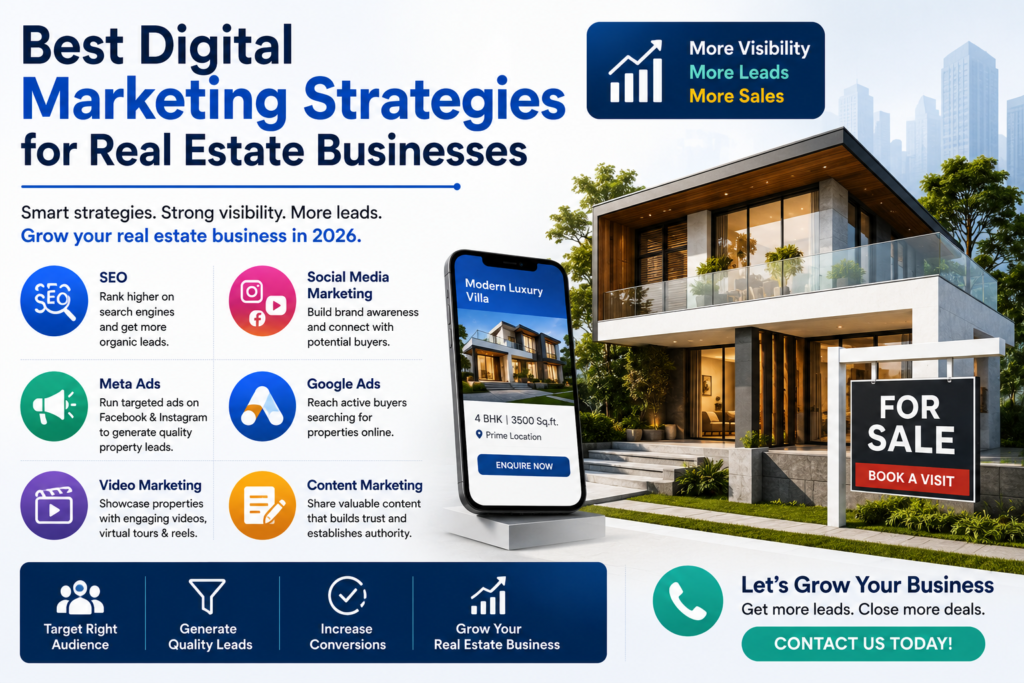
The best digital marketing strategies for real estate businesses combine SEO, social media marketing, Meta Ads, Google Ads, video content, and website optimization. Businesses using these strategies are attracting more customers, generating higher-quality leads, and building stronger online authority.
In 2026, successful real estate businesses will not only sell properties — they will build online experiences that attract, engage, and convert customers effectively.
Conclusion
Digital marketing has transformed the real estate industry completely. Traditional advertising methods alone are no longer enough to compete in today’s online marketplace. Businesses that invest in SEO, social media marketing, Meta Ads, Google Ads, video marketing, and content creation are generating stronger results and attracting more buyers online.
The best digital marketing strategies for real estate businesses focus on visibility, engagement, trust, and lead generation. Companies that adapt to these modern strategies are positioning themselves for long-term growth and success in the highly competitive real estate market.